Parasect
Mushroom Pokémon
Type matchups
Damage taken when attacked- Dry Skin: immune to Water, takes 1.25× from Fire.
Its STAB attacks
Base stats
| HP | 60 | |
|---|---|---|
| Attack | 95 | |
| Defense | 80 | |
| Sp. Atk | 60 | |
| Sp. Def | 80 | |
| Speed | 30 | |
| Total | 405 |
- EV yield
- 2 Attack, 1 Defense
- Base experience
- 142
Evolution
Abilities
Whenever a move makes contact with this Pokémon, the move's user has a 30% chance of being paralyzed, poisoned, or put to sleep, chosen at random. Nothing is done to compensate if the move's user is immune to one of these ailments; there is simply a lower chance that the move's user will be affected.
This Pokémon takes 1/8 of its maximum HP in damage after each turn during strong sunlight, but it heals for 1/8 of its HP each turn during rain. This Pokémon takes 1.25× as much damage from Fire-type moves, but whenever a Water move hits it, it heals for 1/4 its maximum HP instead.
While this Pokémon is in battle, Self-Destruct and Explosion will fail and Aftermath will not take effect.
Profile
- Height
- 1.0 m 3′03″
- Weight
- 29.5 kg 65.0 lbs
- Gender
-
- Egg groups
- Bug, Grass
- Hatch time
- 20 cycles ~5,100 steps
- Habitat
- Forest
- Catch rate
- 75 Medium≈ 17.5% with a Poké Ball at full HP
- Base friendship
- 70
- Growth rate
- Medium Fast
Moves
Legends: Arceus| Lv. | Move | Type | Cat. | Pwr | Acc | PP |
|---|---|---|---|---|---|---|
| 1 | Absorb | grass | 20 | 100 | 25 | |
| 5 | Stun Spore | grass | — | 75 | 30 | |
| 9 | Poison Powder | poison | — | 75 | 35 | |
| 15 | Venoshock | poison | 65 | 100 | 10 | |
| 21 | Slash | normal | 70 | 100 | 20 | |
| 29 | Spore | grass | — | 100 | 15 | |
| 37 | X-Scissor | bug | 80 | 100 | 15 | |
| 47 | Energy Ball | grass | 90 | 100 | 10 |
Where to find it
Legends: ArceusPokeAPI has no location data for Legends: Arceus yet.
Latest game with locations:
Pokédex entries
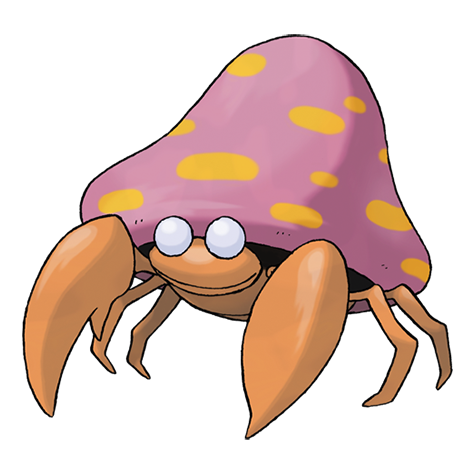
Mushroom-lacking specimens of this Pokémon lie unmoving in the forest, lending credence to the hypothesis that the large mushroom is in control of Parasect's actions.
All 20 Pokédex entries
Mushroom-lacking specimens of this Pokémon lie unmoving in the forest, lending credence to the hypothesis that the large mushroom is in control of Parasect's actions.
The bug host is drained of energy by the mushroom on its back. The mushroom appears to do all the thinking.
The bug is mostly dead, with the mushroom on its back having become the main body. If the mushroom comes off, the bug stops moving.
Its poisonous spores are also used in traditional medicine. Apparently, spores produced in Alola are not of very good quality.
The large mushroom on its back controls it. It often fights over territory with Shiinotic.
It scatters toxic spores from its mushroom cap. Once harvested, these spores can be steeped and boiled down to prepare herbal medicines.
Parasect is known to infest large trees en masse and drain nutrients from the lower trunk and roots. When an infested tree dies, they move onto another tree all at once.
The larger the mushroom on its back grows, the stronger the mushroom spores it scatters.
A mushroom grown larger than the host’s body controls Parasect. It scatters poisonous spores.
It stays mostly in dark, damp places, the preference not of the bug, but of the big mushroom on its back.
A mushroom grown larger than the host’s body controls PARASECT. It scatters poisonous spores.
It is controlled by a mushroom grown larger than the bug body. It is said to prefer damp places.
A host-parasite pair in which the parasite mushroom has taken over the host bug. Prefers damp places.
It scatters toxic spores from the mushroom cap. In China, the spores are used as herbal medicine.
PARASECT are known to infest the roots of large trees en masse and drain nutrients. When an infested tree dies, they move onto another tree all at once.
PARASECT is known to infest large trees en masse and drain nutrients from the lower trunk and roots. When an infested tree dies, they move onto another tree all at once.
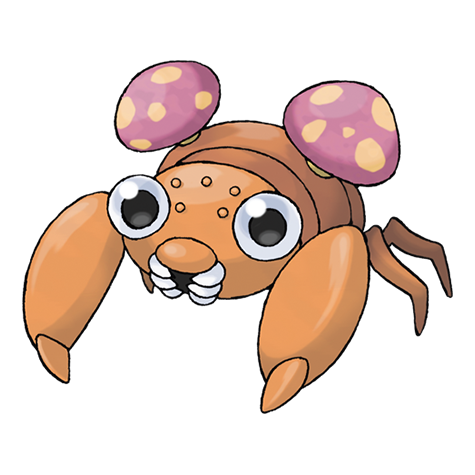
When nothing's left to extract from the bug, the mushrooms on its back leave spores on the bug's egg.
It stays mostly in dark, damp places, the preference not of the bug, but of the big mush rooms on its back.
The larger the mushroom on its back grows, the stronger the mush room spores it scatters.
The bug host is drained of energy by the mushrooms on its back. They appear to do all the thinking.